Ferrosilicon Balls Gain Traction: Affordable, High-Performance Metallurgical Material For Multiple Sectors
Jan 15, 2026
Leave a message
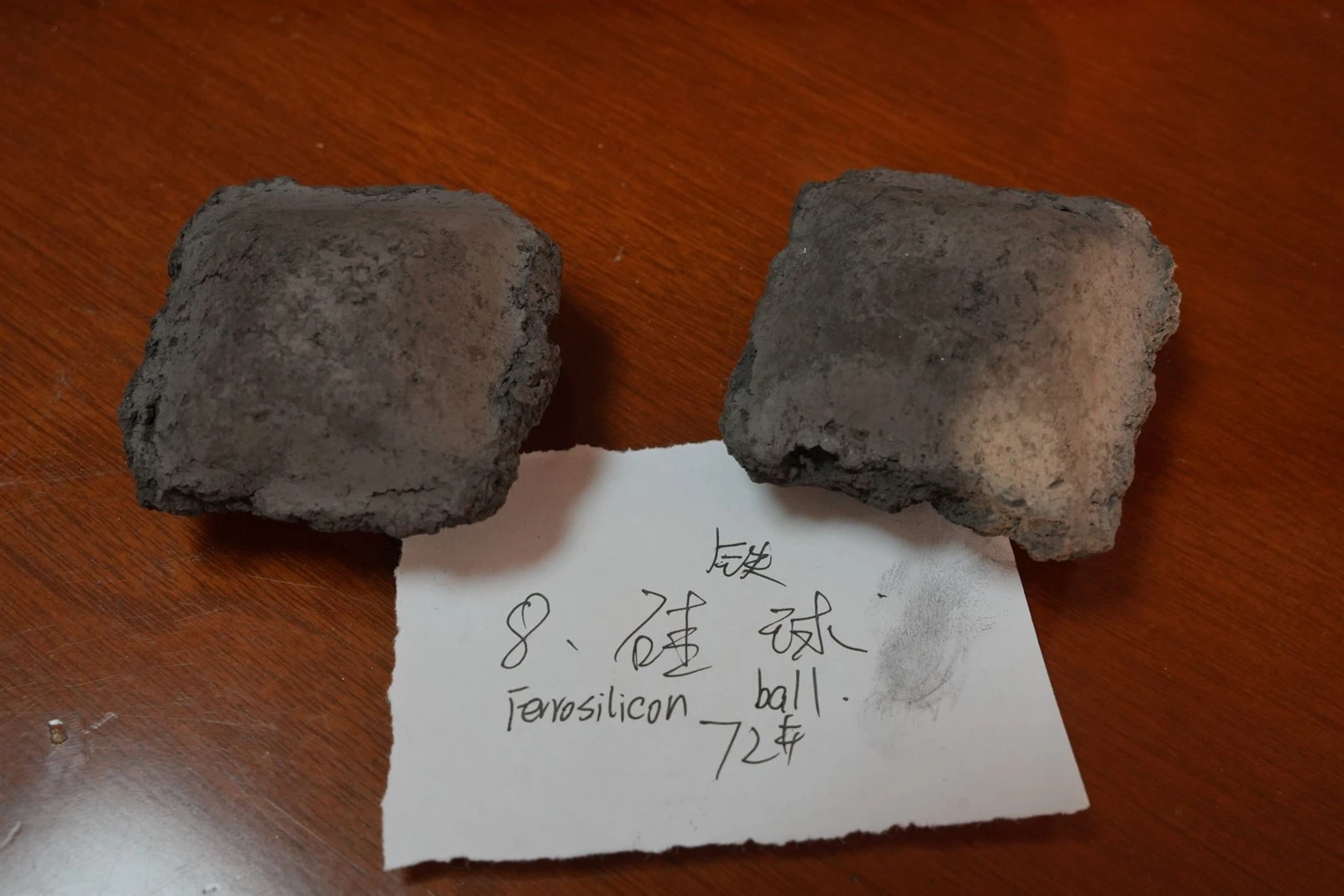
Ferrosilicon spheres are primarily composed of silicon and iron. They are made from byproducts generated during the production of ferrosilicon or ferrosilicon alloys, processed through collection, processing, and specialized pressing techniques. The advent of this product has significantly reduced production costs in the steelmaking and casting industries, offering remarkable benefits such as rapid deoxidation, improved molten iron flow, and enhanced graphitization. With its outstanding advantages of high cost-effectiveness and excellent performance, ferrosilicon spheres have gained favor among numerous manufacturers and have a wide range of applications.
I. Preparation Method
Raw Material Source: Byproducts generated during the production of ferrosilicon or ferrosilicon alloys are used as the core raw material, obtained through recycling and reuse, balancing efficient resource utilization with cost control.
Formulation Process: The raw materials are precisely proportioned according to a preset production index to ensure stable and controllable finished product performance, meeting subsequent usage requirements.
Forming Process: The formulated ferrosilicon powder is fed into specialized briquetting equipment and pressed into spherical products, completing the basic forming process.
Customized Services: We support steel mills and foundries in customizing ferrosilicon balls to meet their specific technical specifications and production needs in steelmaking and casting, enhancing the flexibility and relevance of product use.
II. Performance Advantages
Highly Efficient Metallurgical Functions:Possesses rapid deoxidation capabilities. Silicon reacts with oxygen in molten steel to generate harmless silicon dioxide, promoting the flotation and separation of oxides in the molten steel, effectively improving steel purity. Simultaneously, it promotes iron flow and graphitization, reducing the tendency for white cast iron and improving metallurgical and casting effects.
Excellent Physical Properties: Uniform particle size avoids raw material losses caused by the spontaneous breakage of traditional ferrosilicon blocks. Its rapid melting speed saves fuel consumption, reduces labor, electricity, and transportation costs, and significantly improves production efficiency.
Significant Cost Advantages: Raw materials are derived from industrial byproducts, and the production process is simple, making it more competitively priced compared to traditional ferrosilicon and other metallurgical materials. It also significantly reduces the overall production costs of steelmaking and casting, helping manufacturers improve economic efficiency.
Significant Cost Advantages: Raw materials are derived from industrial byproducts, and the production process is simple, making it more competitive in price compared to traditional ferrosilicon and other metallurgical materials. It also significantly reduces the overall production costs of steelmaking and casting, helping manufacturers improve economic benefits. Highly practical: It possesses excellent thermal and electrical conductivity, making it suitable for various applications; its strong slag-collecting properties aid in effective slag removal, and it can also increase furnace temperature, improve the grade of pig iron and castings, and enhance product toughness and machinability.
III. Application Areas
Iron and Steel Smelting Industry: As a core deoxidizer and alloying agent, it participates in the deoxidation and alloying reactions of iron and steel smelting, improving the hardness, toughness, mechanical properties, and wear resistance of steel. It is widely used in automobile, train manufacturing, and structural steel applications.
Foundry Industry: It can be used as a high-quality inoculant and graphite modifier in the production of cast iron products such as automotive parts, pipes, and railway tracks; it can optimize the fluidity and solidification properties of cast iron, reduce slag and bubble formation, and improve the surface finish and machinability of castings.
Power Industry: Leveraging its excellent electrical conductivity, it is used in the manufacture of power components such as transformers, generators, cables, and transmission lines, helping to improve power transmission efficiency and equipment operational stability.
Chemical Industry: In the production of ammonia, organic compounds, and polymers, it can act as a catalyst and reducing agent, contributing to improved quality and yield of chemical products.
Photovoltaic Industry: With the development of renewable energy, it is increasingly used in the manufacture of core materials for solar panels and photovoltaic equipment, enhancing solar energy conversion efficiency and stability, and supporting the promotion and development of clean energy.