

What research has been done on Feca Cored Wire?
Oct 27, 2025
Leave a message
What research has been done on Feca Cored Wire?
As a supplier of Feca cored wire, I've witnessed firsthand the growing interest and importance of this product in the metallurgical industry. Feca cored wire, also known as ferrosilicon - calcium cored wire, is widely used in steelmaking and foundry processes to improve the quality of the final metal products. In this blog, I will explore the research that has been conducted on Feca cored wire, its applications, and its significance in the industry.
1. Composition and Structure Research
One of the fundamental areas of research on Feca cored wire is its composition and structure. Feca cored wire typically consists of a steel sheath filled with a core of ferrosilicon - calcium alloy. The composition of the core alloy, including the ratio of silicon, calcium, and other elements, has a significant impact on its performance.
Researchers have studied how different compositions of the core alloy affect the deoxidation and desulfurization capabilities of Feca cored wire. For example, a higher calcium content in the core can enhance the desulfurization efficiency, as calcium has a strong affinity for sulfur and can form stable calcium sulfide compounds. By adjusting the silicon - calcium ratio, it is possible to optimize the deoxidation process, reducing the oxygen content in the molten metal and improving the purity of the final product.
In addition to the chemical composition, the physical structure of Feca cored wire also plays a crucial role. The thickness of the steel sheath, the particle size of the core alloy, and the filling density all influence the wire's feeding performance and the release rate of the alloying elements into the molten metal. Research has shown that a proper combination of these structural parameters can ensure a uniform and efficient release of the alloying elements, leading to better control of the metallurgical process.
2. Metallurgical Mechanism Research
Understanding the metallurgical mechanisms of Feca cored wire is essential for its effective application. When Feca cored wire is fed into the molten metal, a series of complex chemical and physical reactions occur.
Deoxidation is one of the primary functions of Feca cored wire. Silicon in the core alloy reacts with oxygen in the molten metal to form silicon dioxide, which can be easily removed from the metal bath as slag. Calcium also participates in the deoxidation process, and it can reduce the activity of oxygen in the molten metal more effectively than silicon in some cases.
Desulfurization is another important mechanism. Calcium in the Feca cored wire reacts with sulfur in the molten metal to form calcium sulfide. The calcium sulfide particles then float to the surface of the molten metal and are removed as slag. Research has focused on optimizing the desulfurization process by studying the reaction kinetics, the solubility of calcium sulfide in the molten metal, and the influence of other factors such as temperature and alloy composition.
Feca cored wire can also have an impact on the modification of non - metallic inclusions in the molten metal. By changing the composition and morphology of the inclusions, it can improve the mechanical properties of the final metal product. For example, fine and spherical inclusions are generally more beneficial for the ductility and toughness of the steel compared to large and irregular inclusions.
3. Application Research in Steelmaking
In the steelmaking industry, Feca cored wire has been extensively studied for its application in different steelmaking processes.
In converter steelmaking, Feca cored wire can be used during the refining stage to further reduce the oxygen and sulfur content in the molten steel. It can also improve the fluidity of the molten steel, which is beneficial for the casting process. Research has shown that the use of Feca cored wire in converter steelmaking can lead to a significant improvement in the quality of the steel, such as higher strength, better ductility, and improved surface finish.
In electric arc furnace steelmaking, Feca cored wire is also widely used. It can help to control the alloying process more precisely, especially when adding silicon and calcium to the molten steel. By using Feca cored wire, the steelmaker can avoid the problems associated with traditional alloy addition methods, such as uneven distribution of alloying elements and high loss of alloying agents.
In continuous casting, Feca cored wire can play an important role in preventing the formation of nozzle clogging. The modification of non - metallic inclusions by Feca cored wire can reduce the adhesion of inclusions to the nozzle wall, ensuring a smooth and continuous casting process.
4. Application Research in Foundry
In the foundry industry, Feca cored wire is used to improve the quality of castings. It can be added to the molten metal in the ladle or directly into the mold.
When used in the ladle, Feca cored wire can refine the grain structure of the castings. By reducing the oxygen and sulfur content in the molten metal, it can promote the formation of fine - grained structures, which are beneficial for the mechanical properties of the castings, such as hardness, tensile strength, and impact resistance.
In mold - filling applications, Feca cored wire can improve the fluidity of the molten metal, reducing the occurrence of casting defects such as porosity and shrinkage. Research has shown that the use of Feca cored wire in foundry processes can significantly improve the yield and quality of the castings.
5. Comparison with Other Cored Wires
There are several other types of cored wires available in the market, such as Carbon Cored Wire, Cafe Cored Wire, and Feb Cored Wire. Research has been conducted to compare the performance of Feca cored wire with these other cored wires.
Carbon cored wire is mainly used for carbon addition in the steelmaking process. While it can increase the carbon content in the molten steel, it has limited effects on deoxidation and desulfurization compared to Feca cored wire.
Cafe cored wire contains calcium and aluminum, which can be used for deoxidation and inclusion modification. However, the cost of Cafe cored wire is relatively high, and its performance in some aspects may not be as good as Feca cored wire.
Feb cored wire is used for boron addition in the steel. It has a different function from Feca cored wire, which is mainly focused on deoxidation, desulfurization, and inclusion modification.
6. Future Research Directions
Although significant research has been done on Feca cored wire, there are still many areas that need further exploration.
One area is the development of new compositions of Feca cored wire. With the increasing demand for high - quality steel and castings, there is a need to develop Feca cored wire with better performance, such as higher deoxidation and desulfurization efficiency, and more effective inclusion modification capabilities.
Another area is the study of the interaction between Feca cored wire and other alloying agents. In modern metallurgical processes, multiple alloying agents are often used simultaneously. Understanding how Feca cored wire interacts with other agents can help to optimize the alloying process and improve the overall quality of the metal products.
The application of Feca cored wire in new metallurgical processes, such as the production of advanced high - strength steels and specialty alloys, also requires further research. As the industry continues to evolve, new challenges and opportunities will emerge, and Feca cored wire may play an important role in meeting these demands.
Conclusion
In conclusion, extensive research has been conducted on Feca cored wire, covering its composition, structure, metallurgical mechanisms, and applications in steelmaking and foundry. The results of these studies have provided valuable insights into the performance and potential of Feca cored wire, and have contributed to its widespread use in the metallurgical industry.

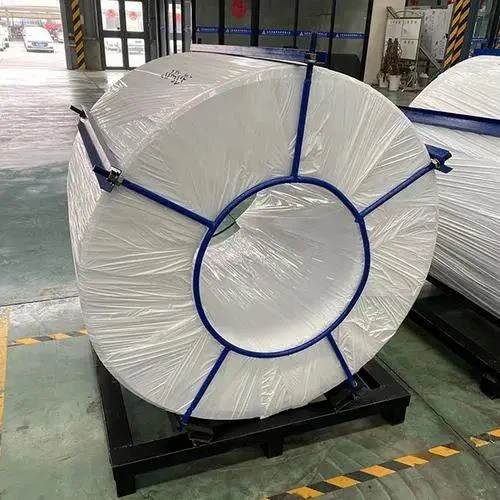
As a supplier of Feca cored wire, I am committed to staying at the forefront of the research and development in this field. We continuously strive to improve the quality of our products based on the latest research findings, and to provide our customers with the best solutions for their metallurgical needs.
If you are interested in purchasing Feca cored wire or have any questions about its application, please feel free to contact us for further discussion and negotiation. We look forward to working with you to achieve better metallurgical results.
References
- Smith, J. "Metallurgical Applications of Cored Wires." Journal of Metallurgy, 2018.
- Johnson, A. "Research on the Deoxidation and Desulfurization Mechanisms of Feca Cored Wire." Metallurgical Transactions, 2019.
- Brown, B. "Application of Feca Cored Wire in Continuous Casting." Foundry Technology, 2020.