


Carbon Cored Wire
Description
Technical Parameters
Why Choose Us?
Competitive Price
As a primary raw material supplier of ferroalloy, we can offer you more competitive prices.
Custom Service
Provide customized plan according to your requirement, advanced after-sale service will provided by Our experienced sales team.
Quality Guaranteed
Henan Xiuyuan trade co.,ltd is one professional export and import suppier in Anyang city, China; Have a good reputation with more than 10 years experience in ferroalloy.
Global Shipping
We have long-term fixed international logistics partners to ensure the stability and safety of logistics. Accept long-term cooperative relationship with advanced technology and equipment, make sure the Quantity and quality are the best.
What is Carbon Cored Wire?
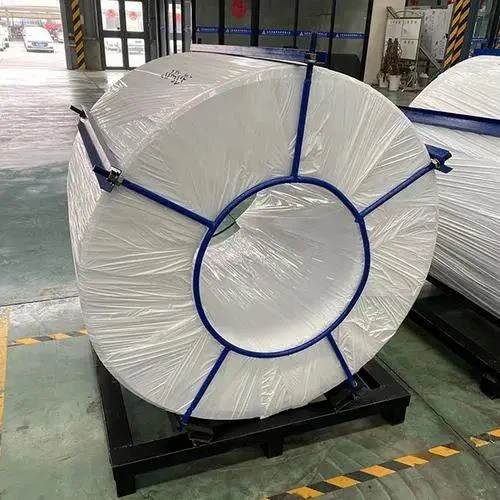
Carbon cored wire is a kind of alloy cored wire that is used in the steelmaking industry. It is to crush high-purity carbon raiser that needs to be added to the molten steel into certain particle sizes, then wrap them in a steel strip. The carbon cored wire is widely used in the steelmaking and casting industry as a carbon rising agent.



Benefits of Carbon Cored Wire
Carbon cored wire reduces costs
One of the most significant benefits of using carbon cored wire wire is that it reduces costs. Carbon cored wire allows welders to work faster, meaning they can complete more work in less time. Additionally, carbon cored wire wire is more affordable than other types of welding wire, such as solid wire. The combination of speed and affordability makes carbon cored wire an ideal solution for industries that require a lot of welding work.
Carbon cored wire produces stronger welds
Another benefit of using carbon cored wire wire is that it produces stronger welds. The wire's flux material helps protect the weld from environmental contaminants, such as oxygen and moisture, which can weaken the weld. Additionally, carbon cored wire wire produces more robust welds and is less prone to cracks, making it an ideal solution for industries that require durable welding.
Carbon cored wire works in various positions
Carbon cored wire is versatile and can be used in various positions, such as flat, horizontal, and vertical. The versatility of carbon cored wire makes it an ideal solution for many industries that require welding in different positions. Additionally, the flux material inside the welding wire ensures that the weld is protected, regardless of the position in which it is made.
Carbon cored wire works on various metals
Carbon cored wire also works on various metals, such as carbon steel, stainless steel, and aluminium. This versatility makes it an ideal solution for many industries that require welding on different types of metals. Also, carbon cored wire produces high-quality welds on these metals, ensuring the final product is strong and durable.
Carbon cored wire is safe
Carbon cored wire is safe for workers to use. Unlike other types of welding that produce harmful fumes, carbon cored wire produces minimal fumes, making it safer for workers to use. Additionally, the welding wire's flux material helps shield the weld from harmful uv rays, making it safer for workers to operate the equipment.
Carbon Cored Wire Variants and Their Characteristics
In order to work with carbon cored wire you need to understand its variants which are gas-shielded and self-shielded. They share a similar outer sheath that is filled with flux. Flux is essentially a compound of alloy and deoxidizers that prevent the weld from contamination.
Gas-shielded wire
This form of wire requires an external shielding gas supply to protect the metal during welding. The composition of the gas used is either Carbon dioxide or a blend of Argon Carbon Dioxide for the purpose of shielding.
Carbon Dioxide enables more penetration but generates a less stable arc whereas The Argon Carbon Dioxide blend reduces spatter and offers good stability. The Argon Carbon Dioxide mixture generates lesser fumes but has low penetration, which limits its application.
These wires are well suited for heavy duties which makes them suitable for the construction of pressure tanks and pipes in petrochemical industries the operators however have to make sure to protect that arc from wind which can blow away the shielding gas.
Self-shielded wire
There is no shielding gas present in a self-shielding wire; however, the shielding is generated as a result of flux within the wire which protects the weld. The self-shielding wire creates more fumes but it removes the hassle of carrying a gas cylinder making it extremely portable.
Self-shielded fcaw wire does not require gas which makes it ideal for outdoor welding. It is undoubtedly convenient and ideal to use in constructing bridges and repairing equipment.

Carbon cored wire is a great choice for welding because it is very versatile and can be used in a variety of different applications. Here are some tips on how to use flux cored wire:
When welding with flux cored wire, it is important to use the correct welding technique. If you are not sure about the correct technique, ask a professional or consult a welding guide.
It is also important to use the correct shielding gas. The wrong gas can cause the weld to be porous and weak.
Make sure that the area you are welding is clean and free of debris. This will help ensure a strong, clean weld.
Follow all safety precautions when welding. Wear proper clothing and safety equipment, and make sure that the area you are working in is well ventilated.
Any continuous welding process will inherently have a higher duty cycle, or the amount of continuous arc time. This makes sense. Deposition travel speed the carbon cored wire process of stick electrodes requires the welder to stop in short intervals of the weld to de-slag and change electrodes. The duty cycle for carbon cored wire is considered to be in the range of 20%. This translates to only 12 minutes of welding every hour an arc is generated. With a continuous process such as carbon cored wire, the duty cycle increases to as much as 50% of the time or 30 minutes per hour for arc generation. This is one factor that makes the use of automated or robotic welding so attractive, the ability to use a continuous process.
Along with the increase in duty cycle comes the benefit of faster travel speeds. Automated welding is only limited to the supply of parts to the weld station and the travel speed of the process. Carbon cored wires can contribute to the higher duty cycles, but only metal cored wires have the capability of combining high duty cycles with high travel speeds to exploit these factors without sacrificing bead appearance, penetration and weld integrity. Increases in travel speed of 35-40% are not unrealistic when converting from a carbon cored wire to a metal cored wire. Increased duty cycles and higher travel speed can significantly reduce the cost of welding. Fabricators who for the first time use a metal cored wire in an automatic application are often surprised at the ability to increase in travel speed while maintaining weld integrity and bead appearance.
Determining the Payback - Carbon Cored Wire
Because carbon cored wire often costs more than other filler metals, it's important to be able to justify to upper management, the purchasing department or owners that the additional investment or process change will offer payback through improved productivity and efficiency.
First, show how the data collected during the pre-weld assessment of the welding operation can translate into a better use of labor - or more importantly, labor that adds to greater productivity. For example, if an operation contains a significant amount of pre-weld activities, show how carbon cored wire could reduce labor by eliminating sandblasting, anti-spatter application or grinding, and then calculate the potential time and cost savings. Also, show how much of that labor could be reallocated elsewhere in the welding operation, particularly to the weld cell, to produce a higher volume of parts. Likewise, consider how much labor could be moved from the post-weld area of the welding operation to the welding cell if the volume of rework or parts rejection could be reduced with carbon cored wire.
Lastly, if there are possible improvements that could occur in the weld cell by converting to carbon cored wire. The higher deposition rates and faster travel speeds of carbon cored wire offer the possibility of completing the welding process faster, to increase overall productivity.
As when considering any potential change in the welding operation, determining whether carbon cored wire is the best choice will take time. Don't rush the assessment or decision, and be sure to trial the wire in a limited capacity - even one weld cell - to begin. Doing so can help ensure that the application is well-suited for a conversion and that it will ultimately be successful.
The carbon cored wire technology, which has rapidly replaced the use of welding electrodes, stands out particularly with its production speed and efficiency advantages. In the welding electrode application, the stops that occur at the end of each electrode due to the nature of the work are eliminated by the mechanized cored wire welding method used with a gas metal arc welding machine.
The unusable waste that occurs at the end of the electrode while welding with the electrode is also a negative point for production efficiency.
As the weld metal deposition capability of cored wires is better than electrodes, it is understandable that it is a natural process for core wire technology to replace the use of electrodes, considering the advantages it provides in view of production efficiency and speed.


Despite the many types of cored wires used to produce different steel grades, to fully leverage their benefits, correct usage methods must be mastered. The cored wire should be vertically and steadily inserted into the molten iron or steel using a wire feeding machine. At the ideal depth, it melts and undergoes a physico-chemical reaction, avoiding reactions with air and slag, and improving element recovery rates.
This process achieves refining, precision casting, altering inclusions, alloying, and composition enhancement, which significantly improves the quality of cast iron and cast steel, reduces casting and steelmaking costs, and enhances the economic benefits of cast iron and cast steel.
Factors to Consider When Choosing Carbon Cored Wires
Carbon Steel Grade: Determine the grade or type of carbon steel you'll be welding. Low, medium, and high carbon steel each have their specifications and requirements. Common grades include A36, A572, and A516, among others. The specific grade will influence the choice of welding wire.
Wire Type: Welding wires come in various forms, including solid wires and flux-cored wires. Consider the welding process you'll be using (e.g., MIG, TIG, or FCAW) and the specific requirements of your project when selecting wire type.
Material Thickness: The thickness of the carbon steel you're welding plays a role in welding wire selection. Thinner materials may require smaller-diameter wires, while thicker sections might benefit from larger-diameter wires.
Joint Configuration: The joint design and geometry are important. Bevels, grooves, or gaps in the joint may require specific welding wire types or sizes for proper penetration and fusion.
Welding Position: Different welding positions (e.g., flat, horizontal, vertical, overhead) may require different welding wire types to ensure proper bead placement and control.
Our Factory
Henan Xiuyuan trade co.,ltd is one professional export and import suppier in Anyang city, China; we supply reasonable price, good service; we will use our professional way to for the general new and old customers with more good quality, more professional services, create a better tomorrow!
There are two team to meet your requirement, our technology team working on innovate and improve products and our sales team working on provide the personalized situation and after-sale service.
We have the ability to meet your specific needs and promptly resolve your issues during the purchasing process.

Ultimate FAQ Guide to Carbon Cored Wire
Hot Tags: carbon cored wire, China carbon cored wire manufacturers, suppliers, factory, Feti Cored Wire, Casi Cored Wire, Ca Cored Wire, Calcium Cored Wire, 12mm Aluminum Wire, C Cored Wire
Previous
Ferrosilicon BallSend Inquiry
You Might Also Like


