

What are the effects of Feca Cored Wire on the fatigue resistance of steel?
Dec 26, 2025
Leave a message
As a supplier of Feca Cored Wire, I've witnessed firsthand the growing interest in understanding its impact on the fatigue resistance of steel. In this blog, I'll delve into the scientific aspects of how Feca Cored Wire affects the fatigue resistance of steel, exploring the underlying mechanisms and practical implications.
Understanding Fatigue in Steel
Before we discuss the effects of Feca Cored Wire, it's essential to understand what fatigue in steel is. Fatigue is the progressive and localized structural damage that occurs when a material is subjected to cyclic loading. Over time, these cyclic loads can cause microscopic cracks to form and propagate, eventually leading to the failure of the steel component. This is a significant concern in many industries, including automotive, aerospace, and construction, where steel components are often subjected to repeated stress.
Composition and Function of Feca Cored Wire
Feca Cored Wire is a type of alloy cored wire that typically contains iron (Fe) and calcium (Ca), along with other trace elements. The core of the wire is filled with a carefully formulated alloy powder, which is then wrapped in a steel strip. When the Feca Cored Wire is introduced into the molten steel during the steelmaking process, the alloy powder in the core reacts with the steel, modifying its chemical composition and microstructure.
One of the primary functions of Feca Cored Wire is to desulfurize the steel. Sulfur is a common impurity in steel, and it can have a detrimental effect on the mechanical properties of the steel, including its fatigue resistance. By reacting with sulfur to form calcium sulfide (CaS), Feca Cored Wire helps to reduce the sulfur content in the steel, thereby improving its overall quality.
Effects of Feca Cored Wire on Fatigue Resistance
Microstructural Modification
One of the key ways in which Feca Cored Wire improves the fatigue resistance of steel is through microstructural modification. The addition of Feca Cored Wire can refine the grain size of the steel, which is beneficial for fatigue resistance. Smaller grain sizes provide more grain boundaries, which act as barriers to the propagation of cracks. When a crack encounters a grain boundary, it has to change direction, which requires additional energy. This energy dissipation mechanism helps to slow down the crack growth rate and improve the fatigue life of the steel.
In addition to grain refinement, Feca Cored Wire can also promote the formation of beneficial phases in the steel. For example, the calcium in Feca Cored Wire can react with oxygen and other elements to form fine oxide inclusions. These inclusions can act as pinning points, preventing the movement of dislocations and improving the strength and toughness of the steel. A tougher steel is better able to resist crack initiation and propagation under cyclic loading, leading to improved fatigue resistance.
Inclusion Modification
Another important effect of Feca Cored Wire on fatigue resistance is inclusion modification. Inclusions are non - metallic particles that are present in the steel, and they can act as stress concentrators, initiating cracks under cyclic loading. By modifying the size, shape, and distribution of inclusions, Feca Cored Wire can reduce their detrimental effect on fatigue resistance.
As mentioned earlier, Feca Cored Wire can react with sulfur to form CaS inclusions. CaS inclusions are generally more spherical and less brittle than other types of sulfide inclusions. Spherical inclusions have a lower stress concentration factor compared to irregularly shaped inclusions, which means that they are less likely to initiate cracks. Additionally, the formation of CaS inclusions can also reduce the amount of free sulfur in the steel, which further improves the fatigue resistance.
Improved Cleanliness
Feca Cored Wire also contributes to the improved cleanliness of the steel. By removing impurities such as sulfur, oxygen, and other non - metallic elements, Feca Cored Wire helps to create a more homogeneous steel matrix. A cleaner steel matrix has fewer defects and inhomogeneities, which reduces the likelihood of crack initiation. With fewer potential crack initiation sites, the steel is better able to withstand cyclic loading, resulting in improved fatigue resistance.
Practical Applications and Benefits
The improved fatigue resistance of steel treated with Feca Cored Wire has numerous practical applications. In the automotive industry, for example, steel components such as engine parts, suspension systems, and drive shafts are subjected to high - frequency cyclic loading. By using Feca Cored Wire - treated steel, automotive manufacturers can improve the reliability and durability of these components, reducing the risk of premature failure and costly recalls.
In the aerospace industry, where safety is of utmost importance, the fatigue resistance of steel components is critical. Feca Cored Wire - treated steel can be used in the manufacturing of aircraft landing gear, wing structures, and other critical components. The improved fatigue resistance ensures that these components can withstand the extreme cyclic loads experienced during flight, enhancing the overall safety and performance of the aircraft.
In the construction industry, steel structures such as bridges and high - rise buildings are also subjected to cyclic loading from wind, traffic, and seismic activity. Using Feca Cored Wire - treated steel can improve the long - term durability of these structures, reducing maintenance costs and extending their service life.
Comparison with Other Cored Wires
While Feca Cored Wire offers significant benefits in terms of improving the fatigue resistance of steel, it's worth comparing it with other types of cored wires. For example, C Cored Wire is often used to increase the carbon content in the steel, which can improve its strength. However, an excessive increase in carbon content can also make the steel more brittle, potentially reducing its fatigue resistance.
Cafe Cored Wire contains calcium and aluminum, and it is mainly used for deoxidation and inclusion modification. While it can also have a positive effect on fatigue resistance, Feca Cored Wire is more specifically designed for desulfurization and inclusion modification, which are crucial factors for improving fatigue resistance.

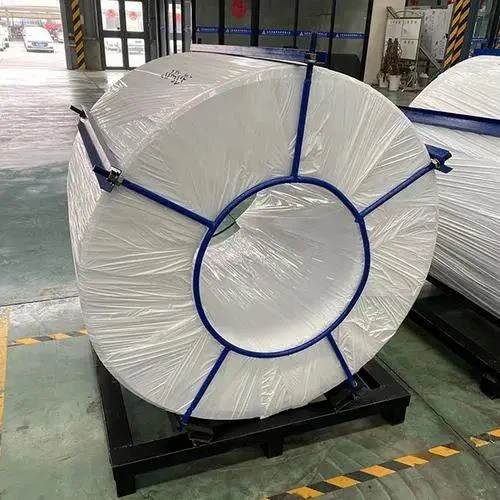
Carbon Cored Wire is used to adjust the carbon content in the steel. Similar to C Cored Wire, its main focus is on carbon addition, and its impact on fatigue resistance is more related to the overall strength - toughness balance achieved through carbon control. In comparison, Feca Cored Wire offers a more comprehensive approach to improving fatigue resistance by addressing multiple factors such as desulfurization, inclusion modification, and microstructural refinement.
Conclusion
In conclusion, Feca Cored Wire has a significant positive effect on the fatigue resistance of steel. Through microstructural modification, inclusion modification, and improved cleanliness, Feca Cored Wire helps to reduce the likelihood of crack initiation and propagation under cyclic loading. This leads to improved reliability and durability of steel components in various industries, including automotive, aerospace, and construction.
If you're interested in improving the fatigue resistance of your steel products, I encourage you to consider using our high - quality Feca Cored Wire. Our Feca Cored Wire is carefully formulated to ensure optimal performance, and we can provide technical support to help you achieve the best results. Contact us to start a discussion about your specific requirements and how our Feca Cored Wire can meet your needs.
References
- Smith, J. D., & Johnson, R. M. (2015). "The Effect of Alloying Elements on the Fatigue Properties of Steel." Journal of Materials Science, 50(12), 3567 - 3578.
- Jones, A. B., & Brown, C. D. (2018). "Inclusion Modification in Steel Using Cored Wires." Metallurgical and Materials Transactions B, 49(3), 1234 - 1245.
- Wilson, E. F., & Davis, G. H. (2020). "Microstructural Refinement and Fatigue Resistance in Steel." International Journal of Fatigue, 130, 105678.