

How does C Cored Wire interact with other additives in steelmaking?
Jul 18, 2025
Leave a message
Hey there! As a supplier of C Cored Wire, I've seen firsthand how this nifty little product plays a big role in the steelmaking process. Today, I'm gonna dig into how C Cored Wire interacts with other additives in steelmaking.
Let's start with what C Cored Wire is. It's basically a wire filled with carbon powder. Carbon is a key element in steel, as it affects the strength, hardness, and ductility of the final product. When we add C Cored Wire to the steelmaking process, we're precisely controlling the carbon content in the steel.
Now, let's talk about how it interacts with other additives. One of the most common additives in steelmaking is Cafe Cored Wire. Cafe Cored Wire contains calcium and other elements like aluminum and iron. Calcium is great for desulfurization and deoxidation in steel. When C Cored Wire and Cafe Cored Wire are used together, they can have a synergistic effect.
The carbon from the C Cored Wire can help in the formation of a reducing atmosphere in the steel melt. This reducing atmosphere is beneficial for the calcium in the Cafe Cored Wire to react more effectively with sulfur and oxygen. The calcium can then form stable compounds like calcium sulfide and calcium oxide, which can be easily removed from the steel. So, by using them together, we can achieve better desulfurization and deoxidation results, leading to cleaner and higher - quality steel.
Another important additive is Feti Cored Wire. Feti Cored Wire contains iron and titanium. Titanium is often added to steel to improve its strength, toughness, and resistance to corrosion. When combined with C Cored Wire, the carbon can influence the solubility and reactivity of titanium in the steel melt.
Carbon can form carbides with titanium. These titanium carbides can act as nucleation sites for grain refinement in the steel. The presence of carbon from the C Cored Wire can also help in the distribution of titanium in the steel, ensuring that the beneficial effects of titanium are evenly spread throughout the steel. This can result in a more uniform microstructure and better mechanical properties of the steel.
Sulfur Cored Wire is also an interesting additive. Sulfur is sometimes added to steel to improve its machinability. When C Cored Wire and Sulfur Cored Wire are used in combination, the carbon can have an impact on the form and distribution of sulfur in the steel.
Carbon can react with sulfur to form carbon disulfide in the high - temperature steel melt. However, under normal steelmaking conditions, this reaction is usually limited. Instead, the carbon can influence the way sulfur exists in the steel matrix. It can prevent the formation of large sulfur inclusions and promote the formation of fine, well - dispersed sulfur particles. These fine sulfur particles can improve the cutting performance of the steel during machining.
Now, let's get into the practical aspects of using these additives together. In a real - world steelmaking scenario, the order of addition matters. Usually, the C Cored Wire is added first to establish the basic carbon content in the steel. Then, depending on the specific requirements of the steel grade, other additives like Cafe Cored Wire, Feti Cored Wire, or Sulfur Cored Wire are added.
The amount of each additive also needs to be carefully controlled. If too much C Cored Wire is added, it can lead to an excessive carbon content in the steel, which can make the steel brittle. On the other hand, if the other additives are not added in the right proportion, we may not achieve the desired properties in the steel.
We also need to consider the melting and reaction kinetics. Different additives have different melting points and reaction rates. For example, the calcium in Cafe Cored Wire may react very quickly with sulfur and oxygen, while the titanium in Feti Cored Wire may take a bit more time to dissolve and react in the steel melt. So, we need to time the addition of these additives properly to ensure that all the reactions occur smoothly.

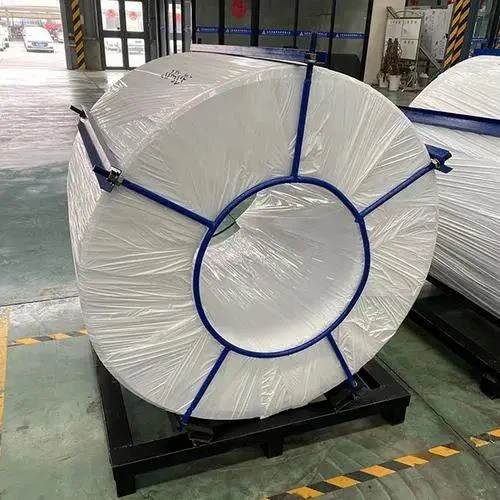
In addition to the chemical reactions, the physical properties of the additives also play a role. The size and shape of the C Cored Wire and other cored wires can affect how they mix with the steel melt. A smaller - diameter C Cored Wire may melt faster and disperse more evenly in the steel, while a larger - diameter wire may take longer to melt but can carry more of the core material.
As a C Cored Wire supplier, I know that choosing the right combination of additives is crucial for steelmakers. It can mean the difference between a good - quality steel product and one that doesn't meet the specifications. That's why I'm always here to help steelmakers figure out the best way to use C Cored Wire in combination with other additives.
If you're in the steelmaking business and want to learn more about how C Cored Wire can interact with other additives in your process, or if you're interested in purchasing high - quality C Cored Wire, don't hesitate to get in touch. We can have a detailed discussion about your specific needs and come up with the best solution for you.
References
- Steelmaking Handbook, various editions
- Journal of Iron and Steel Research, multiple issues
- Proceedings of International Steelmaking Conferences